
Long-Distance Rural Relationships: Making Country Love Work Across the Miles
Out here, the nearest single who shares your values might be 80 miles down a two-lane road — or across a state line. This is an honest guide to courting across the miles, from the first text to the first truck ride to the wedding aisle.
The Short Answer
Why Rural Dating Is Almost Always Long-Distance
If you live in a county of 12,000 people, you’ve already met most of the eligible singles by your 30th birthday. You went to school with them, you sit three pews back from them at church, you ran into their mother at the feed store last Tuesday. The local pool is shallow on purpose — small towns are small. That’s the math every country single runs into sooner or later.
Unlike cities where a ten-minute drive puts you in front of thousands of potential partners, dating in rural areas means the nearest single who shares your faith, your work ethic, and your lifestyle might be 30 miles away. Or 80. Or, in the Plains and the Rockies, several hundred. This isn’t a flaw in the system. It’s geography. And it’s why virtual-first courtship has exploded among country singles who used to rely on the church picnic and the county fair.
In Ireland the next town is ten minutes away. In Kansas the next town that matters might be three hours. That single fact has rewritten how rural America falls in love.
Working farmers and ranchers face an extra wrinkle: the land doesn’t let them travel freely. Livestock need checking at dawn and dusk. Irrigation cycles don’t pause for Tinder. A 2017 Mashable piece put it plainly — the nature of farm work makes relocation and long-distance courtship uniquely hard, because you cannot simply drop everything and drive six hours on a whim. The cows still need fed. That’s why a rural dating strategy has to be planned, not improvised.
Planning the Drive: From Text to Truck to First Date
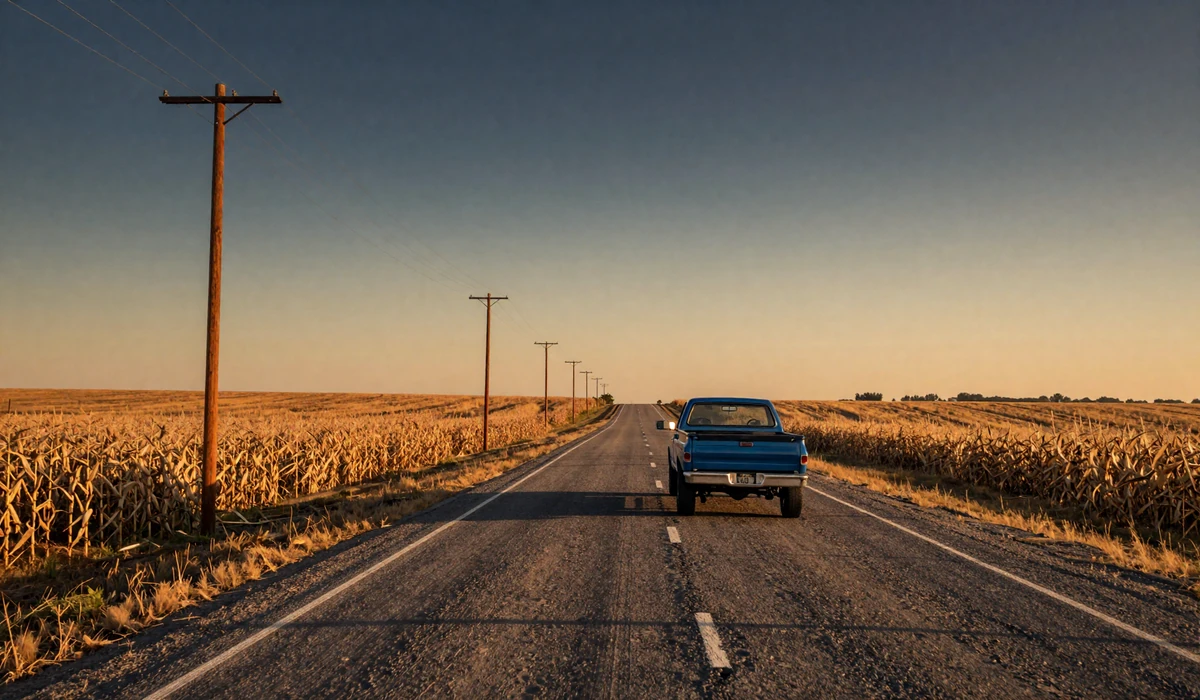
Consider John Sellers, a 71-year-old Iowa cattle farmer who had been a widower for years before he saw a TV ad and joined a farmer-focused dating site. His small town had no options. His work schedule had less. Three months into writing back and forth with a Kansas woman named Susan Bowlby, he climbed into his truck and drove 360 miles from his Iowa farm to Hutchinson for their first in-person date. Four years later they were engaged. Susan called him “definitely a keeper,” and planned to move to Iowa to raise livestock, tend a garden, and photograph wildlife with him.
That 360-mile drive is the rural dating story in miniature. A good long-distance plan has three moving parts: the written stretch, the travel window, and the meeting place. Exchange messages for at least six to eight weeks before you put diesel in the tank. Use that time to talk about faith, money, family, livestock, and whether either of you is willing to move someday. Those conversations are a lot easier at a keyboard than across a restaurant table at mile 360.
When it’s time to drive, pick neutral ground for the first meet — a town you both know, a county fair, a church on a Sunday morning. Book your own room. Tell three people your plan. Drive yourself so you can leave on your own terms. Most importantly, pick a weekend outside planting and harvest windows. April and October weddings are beautiful; April and October first dates usually don’t happen.
A Communication Cadence That Survives Harvest
Long-distance breaks down in two places: the silence gets too long, or the talking gets too constant. Both kill it. The sweet spot for most farm couples is a predictable weekly rhythm that flexes during the busy seasons. You don’t need hours every night — you need reliability.
One more rule: don’t save hard conversations for the drive home after a visit. Exhaustion plus highway plus unresolved feeling is a bad recipe. Park the heavy stuff for a Sunday call when you’re both rested.
Your First In-Person Date: 3 Steps That Matter
After weeks of letters and calls, the first handshake is its own kind of harvest. Three things to get right.
Pick a Daytime, Public Spot
Farmers’ market, diner breakfast, county fair on a Saturday morning. Daylight, other people around, an easy exit. Skip dinner-and-drinks for meeting number two.
Plan a 48-Hour Window
Budget two nights in town so there’s no pressure to cram everything into six hours. If it goes well, you have Sunday morning for a slow coffee. If it doesn’t, you still get to see a new town.
Debrief Before You Drive Home
Sit with your thoughts for an hour before you text the whole family. Driving ten hours on adrenaline and then making a big announcement usually misreads the moment. Sleep on it.
360 Miles and Worth Every One: John and Susan
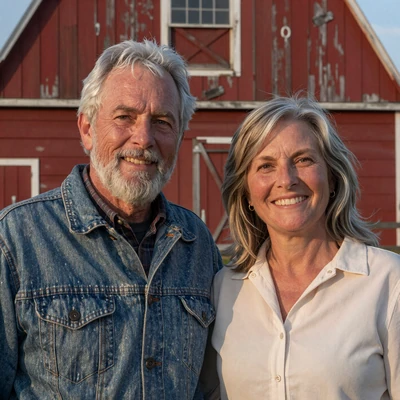
Forty-seven years after I lost my wife, I figured the dating chapter was closed for good. Susan’s profile changed my mind. We wrote for three months before I made the drive to Kansas — 360 miles, and every one of them was worth it. She understood cattle. She understood late suppers. She understood me. Four years later she’s moving up to Iowa to raise livestock and photograph wildlife with me. Don’t let the miles scare you off the right person.
John & Susan
Iowa & Kansas Engaged 2025
Beating the Isolation That Comes With the Land
The hardest stretch of any long-distance rural relationship is the Tuesday night in February when the wind is howling off the north pasture and your person is six hours away. You’re not lonely in a crowded-city way — you’re lonely in a wide-open-spaces way. That flavor of isolation has its own weight. Farm work is physically demanding and geographically anchoring, which means a farmer can’t easily hop in the truck for a surprise visit when the blues hit.
What helps: shared routines that happen at the same time in both houses. Morning coffee at 6 a.m. on speakerphone. The same radio program or podcast streaming at chore time. A Sunday evening devotional read together over video. You’re not erasing the miles — you’re laying down parallel tracks of daily life so the distance feels less like a canyon and more like a fence line you’re both working along.
Lean on community, too. A long-distance rural relationship needs a local bench: a neighbor who’ll check your calves when you drive down to see your person, a sister who’ll sit with you on a hard night, a pastor who knows your situation. Don’t try to carry the miles alone. Country life has always been a village game, even for the romantic parts.
Keep Reading
Explore the local pages that most often bridge long-distance farm romances — Iowa, Kansas, and the wide-open Montana ranch country.
Ready to start writing? Head back to the blog, browse all 19 state pages, or read How to Date a Farmer for the day-to-day primer that pairs with this long-distance guide.